


Powered by ditriptyre


Van Highway vs All-Terrain: How to Pick the Right NEREUS Light Truck Tyre
A dealer’s recommendation has to align closely with the real-world routes their customers run. A tyre built for paved delivery vans can work perfectly on regular tarmac runs, yet fall short when drivers spend plenty of time on gravel tracks or rough backcountry trails. When weighing up van tyre sizes and light truck all terrain tires, good advice links typical road conditions to actual usage. Before locking in a fitment, you always verify the exact tread pattern, dimension and load rating for that vehicle.
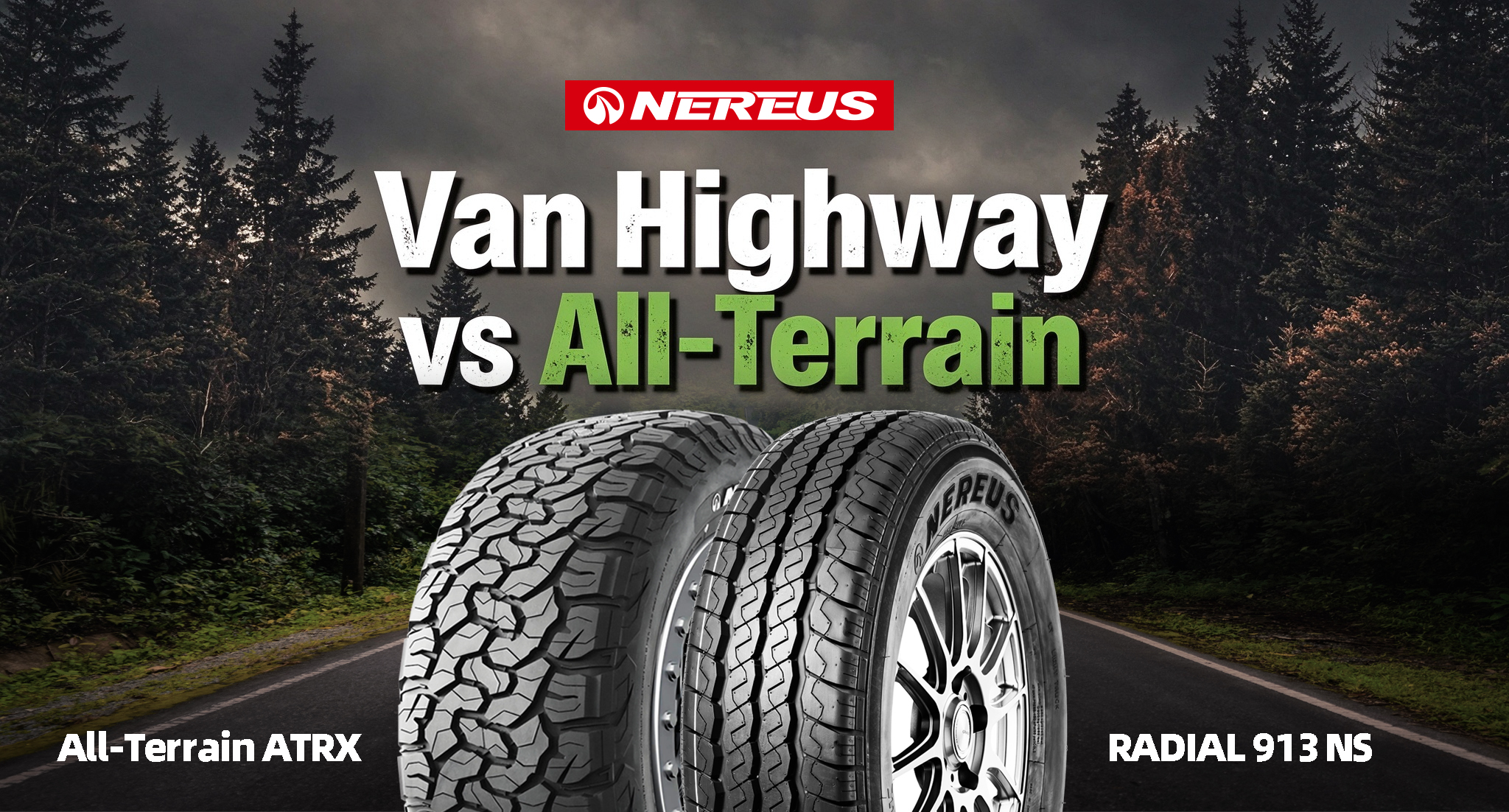
Tread Design Defines the Terrain Difference Commercial van tyres engineered for highway use are built for paved surfaces, performing reliably on dry and wet asphalt alike. Their tread layout and block shaping deliver stable handling, efficient water removal and predictable wear over long highway mileage. This type of tires for light trucks prioritises wet-road control and resistance to hydroplaning, which fits operators running daily delivery rounds and light haulage on sealed roads.
Unpaved surfaces change how a highway tread works. Compacted gravel, loose dirt and bumpy ground cut down usable contact area and grip. Smooth pavement is the intended operating ground for highway van tyres; gravel roads and cross-country tracks demand a completely different tread structure. The 13–16 inch bracket covers many small vans and light delivery rigs, but rim size alone is never enough to confirm fitment. The tread pattern, load needs and terrain the driver faces every day carry equal weight.
Light truck all terrain tires strike a balance between on-road manners and usable traction across a wider mix of ground types. That balance does not mean they perform equally well everywhere. Deep mud, jagged rock and heavily rutted trails need separate evaluation, even when a tyre carries the all-terrain label.
Local route conditions give dealers a simple starting filter. Look at the roads buyers travel regularly, including trips outside their home region. This sets the baseline terrain requirement. Next, confirm whether the selected tyre delivers the wet-road stability and load capacity the fleet really needs.
Wet Performance Depends on the Exact Tyre Wet asphalt does not automatically make light truck all terrain tires the better pick. Commercial van tyres are also tuned for wet paved surfaces. Broad claims such as “all-terrain tyres grip better when raining” ignore big differences between individual products and the ground they are built for.
Wet-road capability comes down to how the tread clears water. A tighter highway tread with optimised block layout can shed water fast and cut hydroplaning risk, while an open all-terrain void pattern focuses on flushing mud out of the tread. Dealers should match wet performance traits to the customer’s usual route, rather than just grouping by tread family.
Meaningful side-by-side comparisons rely on named patterns and full size variants. Within the NEREUS range at https://www.ditriptires.com/product-list/van-tyre, NS913 and ATRX serve separate terrain roles. Their full specs show why a product category name and tread look cannot tell the whole story.
Driving Needs Give Each Pattern a Role The NEREUS NS913 is a premium highway option for light trucks, built for steady, predictable performance on paved roads. Robust construction extends service life, while its custom tread block layout moves water away quickly. This setup delivers confident handling on wet surfaces and keeps hydroplaning risk low for van fleets.
NS913 covers rim sizes from 13 to 16 inches. Several popular van tyre sizes in this line feature raised white wall styling: 185R14C, 195R14C, 205/75R14C, 195R15C and 205/75R15C. This makes it a solid pick for van operators, small delivery fleets and buyers wanting dependable highway performance plus a distinctive sidewall finish.
NEREUS ATRX fills a different user niche. This dedicated all-terrain tread balances wear resistance, sure-footed handling and consistent braking across mixed ground. Its calibrated void ratio creates a larger contact patch, cutting road noise for a smoother ride on the highway. The wider tread footprint boosts off-road traction and cross-country ability for confident handling on changing terrain. Reinforced upper shoulder construction adds strength and sidewall protection, helping the tyre hold up in rough conditions.
ATRX spans 14–20 inch rims, with white letter marking on the sidewall. This cosmetic detail remains a favourite among pickup and light truck owners who split their driving between tarmac and trails. When advising buyers on light truck all terrain tires, dealers should tie the tyre’s strengths directly to that mixed-use driving profile.
A customer enquiry for ATRX might target the LT265/70R16 121/118S variant. The full size marking locks the request to that specific build. It does not mean the tyre is approved for every vehicle running a 16-inch wheel.
Each pattern serves a clear purpose, and there is no universal “best” choice. These two treads are built for different jobs, and their van tyre sizes do not overlap completely. Where dimensions match on paper, dealers still review service specs and load rating before swapping one tyre for the other.
Shared Dimensions Still Need a Specification Check Size markings alone miss critical detail found in the service specification. C-rated construction signals reinforced load capacity for light commercial use, yet two tyres with the same printed size can carry different load indexes and speed ratings.
The table below compares two examples with matching nominal sizing, highlighting separate load and speed markers. This helps dealers spot key distinctions without assuming they can be swapped freely.
| Pattern and variant | Terrain role | Core performance feature | Sidewall finish |
| NS913 | Highway light truck | Strong water evacuation, anti-aquaplaning | Raised White Wall |
| ATRX | All-terrain | Reinforced shoulder, mixed-surface traction | White letter |
Both carry light-truck C construction, yet their service specs differ. Any replacement must meet the vehicle maker’s load and speed requirements. This table lists published specs only; it does not come from identical real-world road testing and does not approve automatic interchange.
Shared C-rated build also limits what you can conclude from terrain classification. Neither category guarantees superior wet braking or off-road grip. Styling touches such as raised white wall or white lettering are cosmetic upgrades. They do not change load limits or the terrain the tyre is designed for.
A Terrain-Focused Choice With a Clear Product Fit The right recommendation combines typical route, job function and exact tyre variant. Highway commercial van tyres suit sealed-road commercial work; all-terrain options bring extra flexibility for mixed on and off-road travel. Dealers use this terrain split to explain the categories, then back up the suggestion with the pattern name and full technical marking.
You can apply the same logic when reviewing your product range: map local terrain demands to matching treads, and always keep the full size and service rating in view. This keeps conversations focused on what the customer actually needs, instead of broad, unproven claims about a whole tyre category.
FAQ
Are highway tires for light trucks suitable for rain? Commercial van tyres for highway use are designed for wet paved roads as well as dry asphalt. Check the water-clearing tread geometry and intended operating conditions for the specific tyre. Rain by itself does not decide whether highway or light truck all terrain tires are the better fit.
Can highway van tyres be used off-road? Loose gravel, mud and uneven ground reduce the performance of highway treads. These are not purpose-built off-road tyres. Consistent sealed pavement is their intended working environment.
Does all-terrain equal a mud tyre? Light truck all terrain tires and dedicated mud tyres have separate design goals. Where deep mud and rocky traction are top priorities, examine the tread layout and void ratio closely. The all-terrain label alone does not confirm it works for heavy mud conditions.
Does matching van tyre sizes mean two tyres can swap directly? Printed size is just one part of fitment checking. Full specifications must meet the vehicle manufacturer’s rules, covering load index, speed rating and load range. The C-rated examples above show why the complete marking matters.
Should dealers stock both highway and all-terrain patterns? That call depends on the dealer’s customer base and the roads those drivers travel. Map demand by route type and vehicle application before finalising stock plans. There is no fixed stocking ratio for highway versus all-terrain light truck tyres.